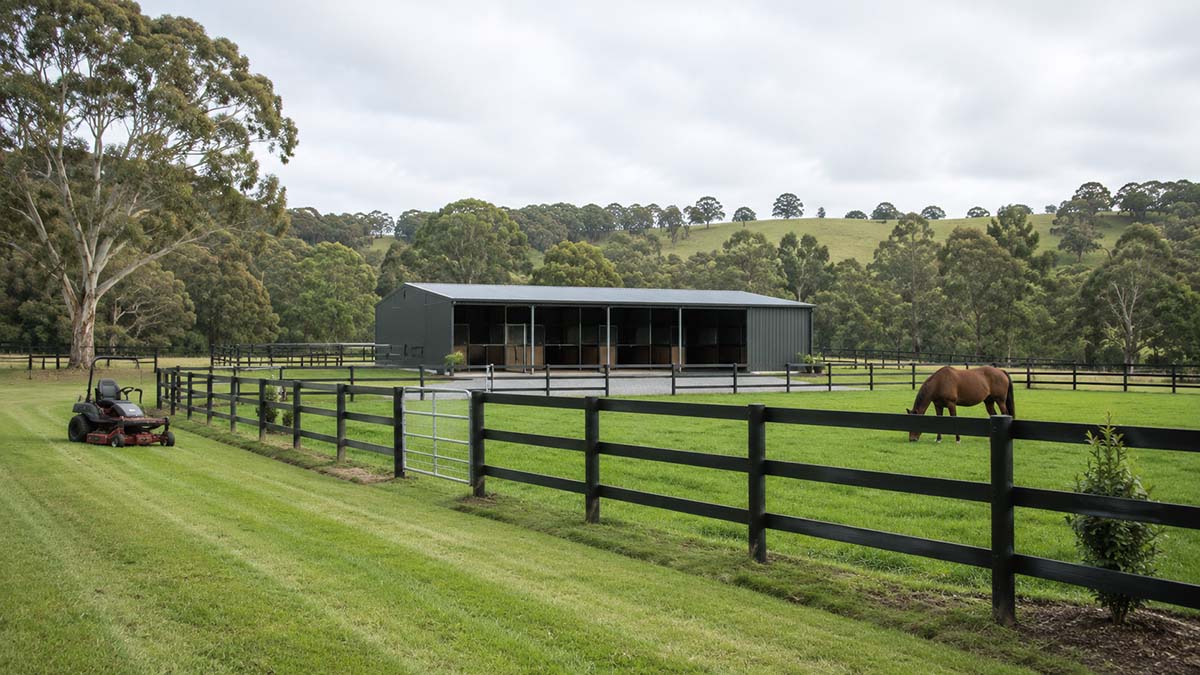
Keeping grass around stables and paddocks healthy means treating a horse property as four distinct zones: a house lawn cut under 50 mm, a stable yard kept tidy, laneways mown at 75, 100 mm, and grazing paddocks maintained at 75, 150 mm to protect horses and pasture. A one-height-fits-all mow damages the sward and creates safety risks.
TL;DR
- A horse property has at least four mowing zones that need different heights, equipment, and frequency.
- Paddocks should stay at 75, 150 mm after mowing, not the short finish of a domestic lawn.
- Slashing or topping resets rough pasture, while lawn mowing keeps ornamental grass neat.
- Remove or harrow manure before mowing and never slash through poisonous weeds.
- High-traffic gateways and stable yards need drainage and hard surfacing, not just more mowing.
The mowing zones on a horse property.
A horse property is never a single patch of grass. Walk from the house yard to the back paddock and you move through a series of zones, each with its own job. The house lawn is a recreational surface meant to look neat. The stable yard is a working area with heavy foot and hoof traffic. Laneways and tracks connect paddocks and need to stay safe under constant movement. Grazing paddocks are productive feed areas that also need to recover after each rotation. When all these zones are mown to the same low height, you weaken the pasture, invite weeds, and create uneven, unsafe ground.
The simplest approach is to define each zone and match the cut to its purpose. The house lawn can be treated with regular fine mowing and edging, just as we do for any Expert Lawn Mowing & Maintenance in Ballarat property. Laneways and the immediate stable surrounds benefit from a higher cut that retains some cushion and reduces dust. Paddocks need cutting heights that protect the grass crown and keep forage at a safe stage for horses. Overgrown fencelines and rough patches call for slashing rather than a lawnmower.
Property layout also affects how easily paddocks can be maintained. Well positioned horse stables and paddock shelters can give horses protection away from vulnerable gateways and help reduce repeated traffic across wet or heavily worn sections of pasture. And muddy gateways are not a mowing problem at all: they need drainage and surfacing, backed up by Expert Gardening Services that can tidy the margins once the ground is stable. When each zone gets the right treatment, the whole property looks cared for and stays safer for horses.
Why should horse paddocks not be mown like a domestic lawn?
Horse paddocks should not be mown like a domestic lawn because the minimum safe post-mowing height for a grazing paddock is roughly 75, 150 mm, while a house lawn is typically kept under 50 mm. Cutting horse pasture too short removes the leaf area grasses need to regrow, weakens the root system, and exposes bare soil that weeds quickly colonise. More critically, very short, stressed grass can concentrate sugars in the lower stem, which raises the risk of laminitis in sensitive horses.
University extension guidance for established pastures consistently recommends leaving at least 75, 100 mm of residual height after mowing, and often higher during slow-growth periods. The Rutgers best management practices note that mowing horse pastures too short reduces forage yield and encourages weed invasion. The University of Minnesota adds that mowing after each grazing rotation should keep the sward at around 100, 150 mm to protect roots and prevent overgrazing. A domestic lawnmower set low for a manicured look simply cannot achieve that in a paddock without scalping the uneven ground and leaving behind a stressed, patchy sward.
We apply this principle on every horse property we care for. Our lawn mowing sessions are adjusted zone by zone: the house lawn receives a fine finish, while paddock areas are left taller, with the cut height chosen to suit the grass type and the property’s overall appearance. It is never a one-size-fits-all pass.
What is the difference between lawn mowing and paddock slashing?
Lawn mowing uses a reel or domestic rotary mower to produce a clean, short, even finish on ornamental turf, while slashing (or topping) is a rough cut with a heavy-duty brush cutter, flail mower, or slasher set high to knock down tall, stemmy grass, control seed heads, and reset overgrown pasture. Lawn mowing is about presentation; slashing is about pasture management and weed suppression.
In horse systems, topping is a standard practice recommended to maintain sward quality without grazing the grass too hard. The Teagasc grassland guide for horses describes topping as a method to remove mature stem and seed heads after a grazing rotation, encouraging fresh leafy regrowth that is more nutritious and palatable. Because a flail or rotary slasher can handle thicker material and uneven ground, it is the right tool for rough paddock margins, fencelines, and areas that have been left to grow out. A domestic mower would choke and leave a ragged mess in the same conditions.
We tailor the equipment and finish to each zone. Fine turf around the house gets the clean lawn mower pass, while overgrown paddock areas receive the heavier lawn mowing approach that includes slashing where needed. This ensures the lawn looks well kept and the pasture stays productive.
What should you do with horse manure before mowing a paddock?
Horse manure must be removed or properly harrowed before any paddock mowing takes place. Leaving piles intact and running a mower through them smears manure across the sward, creates rank patches of grass that horses refuse to eat, and distributes worm eggs across the entire paddock.
The University of Minnesota recommends removing manure from paddocks at least twice a week during the grazing season, or more frequently if stocking density is high. If removal is not practical, harrowing on a series of hot, dry days is the next best step: it breaks up clumps so the manure fragments dry out quickly, exposing parasite eggs to sunlight and desiccation. Wet or cool conditions make harrowing a risk because eggs survive and can infect horses when they graze the regrowth. Where faecal egg counts indicate a high worm burden, skip harrowing altogether and remove the manure completely before mowing. Field Crop News reinforces that spreading fresh manure without enough dry weather simply contaminates more pasture area.
Our gardening tidy-up service can include clearing or spreading manure as part of bringing the whole property back under control. We coordinate the timing so the paddock is clean and ready before any machinery goes in.
How should you handle poisonous weeds when mowing horse paddocks?
Do not slash or mow through poisonous weeds. Identify and physically remove plants such as ragwort, nightshade, hemlock, and fireweed before mowing, or treat them with a targeted herbicide and wait until they are completely dead and gone. Cutting wilted, toxic plant material scatters smaller, more palatable fragments that horses are far more likely to eat, and the drying process can concentrate certain toxins, increasing the poisoning risk.
The Rutgers horse pasture management guide lists regular weed monitoring and prompt removal as essential best management practices, particularly for toxic species. Stable Management’s year-round tips reinforce that mowing alone does not control established perennial weeds and can make some poisonous plants more dangerous if they are cut and left in the paddock. For small infestations, hand pulling after rain when the soil is soft works well, provided the whole root is removed. For larger areas, a selective herbicide applied by a qualified operator may be necessary, followed by a waiting period before the paddock can be safely mown and grazed.
We can identify the common toxic plants that appear on Ballarat properties and arrange careful removal before any paddock mowing takes place. Our gardening team handles the groundwork so the paddock is safe to cut and safe for horses afterwards.
How can you manage mud around stables and gateways to keep surfaces safe?
Mud cannot be mown away. High-traffic areas around stables, gates, and water troughs need a surfaced sacrifice area, built with a geotextile fabric base and 100, 150 mm of crushed rock, to create a stable, free-draining surface that withstands hooves and weather. Scrape and re-grade gateways after prolonged wet periods, install diversion drains to keep storm water off the track, and only mow the surrounding grass once the ground is firm enough to support machinery without leaving ruts.
The University of Minnesota describes sacrifice lots as a deliberate strategy to protect pastures by concentrating winter and wet-weather traffic on a well-drained surface, giving the grass paddocks a chance to rest and recover. The Stable Management year-round tips stress that gateways and laneways are the first places to break down when horses are moving on wet soil, and that scraping and adding aggregate is far more effective than repeatedly mowing the mud. Once the base is stable, maintaining a grass verge at the edges with a high mow keeps the area tidy without churning the soil.
Once the mud is under control, the whole stable yard presents better. Our exterior cleaning service can restore the look of surrounding hard surfaces, from stable aprons to paths and driveway edges, so the property feels clean and well managed every day.
Frequently asked questions.
Do horses get bored in paddocks?
Horses can become bored in a paddock if there is little to do beyond standing and eating. Providing a companion, spreading hay in several piles, adding a safe scratching post, or using treat balls can increase natural foraging and movement. A well-maintained paddock with varied grass heights and a few browse-safe shrubs also encourages more exploratory behaviour.
Can grass be too long for horses to graze?
Yes, grass that is too tall and stemmy is less palatable and lower in digestible energy for most horses. When grass exceeds roughly 200, 250 mm, it begins to produce seed heads and the leaf-to-stem ratio drops, making it harder for horses to get enough nutrition. Topping the paddock after grazing resets the height and stimulates fresh, leafy regrowth that is easier to graze.
What is the 20% rule for horse paddocks?
The 20% rule typically refers to the maximum recommended slope for a horse paddock to prevent erosion, runoff, and leg strain. Paddocks with more than a 20 percent grade are difficult to maintain, channel water rapidly, and can create uneven footing that increases injury risk. Siting feeding areas on the flattest part of the paddock helps keep horses on safer ground.
How often should you mow a horse paddock?
An established horse paddock usually benefits from mowing after each grazing rotation, once the horses move to the next section, which might be every three to five weeks during active growth. The goal is to clip forage back to around 75, 100 mm, remove seed heads, and even out roughs, not to cut it like a lawn on a fixed weekly schedule. Slower growth in late summer or winter means less frequent topping.
What is a sacrifice paddock and why does it help with mud?
A sacrifice paddock is a small, surfaced area where horses are confined during wet weather or winter to protect the main grazing pastures from poaching and mud damage. It normally has a geotextile and crushed rock base, good drainage, and easy access to shelter, water, and hay. By concentrating traffic on a durable surface, the grass paddocks stay intact and recover faster when the weather improves.